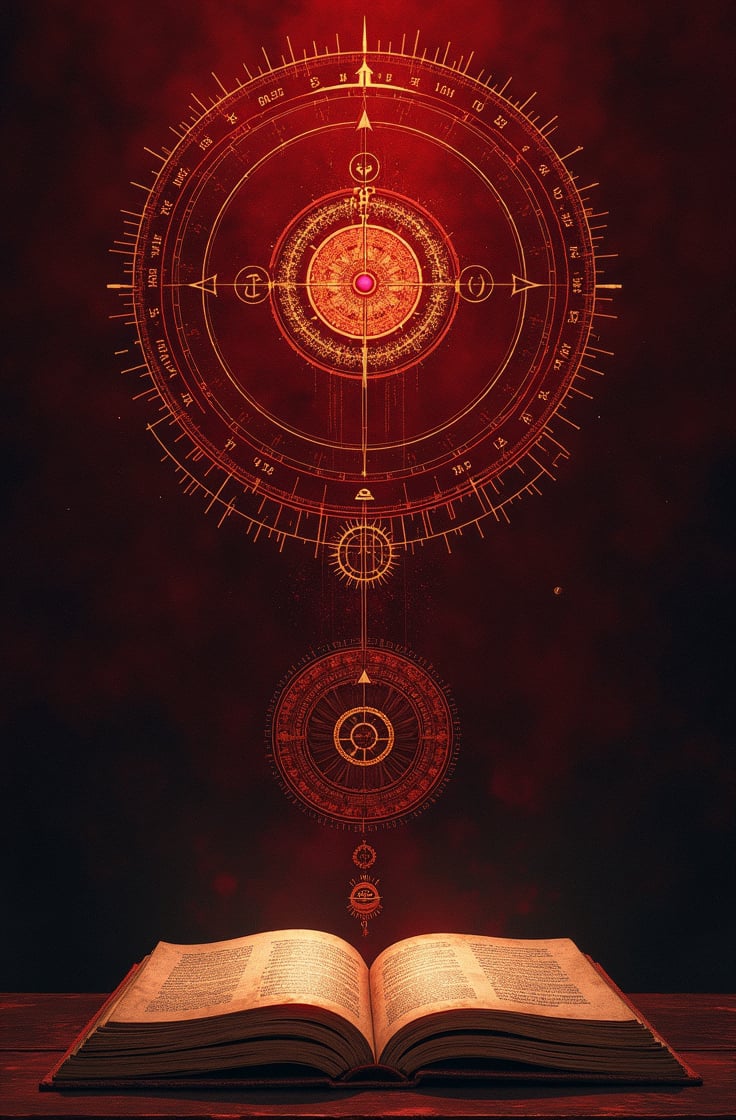
Astrology is commonly described as a historical practice that developed alongside early observations of the sky. In many ancient societies, people tracked the movement of the Sun, Moon, and visible planets in order to organise time, seasons, and agricultural cycles. These observations were recorded in calendars and tables that helped communities understand recurring patterns in nature. At this stage, astrology and astronomy were not clearly separated, as both relied on systematic observation and record-keeping. In early cultures, celestial observation often held symbolic as well as practical significance. The sky was used as a reference point for ritual timing, social organisation, and storytelling. Over time, symbolic associations were formed between celestial movements and human activities. These associations varied widely across regions and were shaped by local beliefs, philosophical ideas, and environmental conditions. Importantly, astrology did not develop as a single unified system, but rather as a collection of related practices. Written records from Mesopotamia, Egypt, and other early civilisations show that celestial phenomena were interpreted within broader cultural frameworks. These interpretations were descriptive and symbolic rather than experimental in the modern scientific sense. Understanding this context helps explain why astrology is often discussed today as part of cultural history rather than as a method of empirical analysis.

Classical, medieval, and scholarly traditions
During classical antiquity, astrology became more systematised in parts of the Mediterranean world. Concepts such as zodiac signs, planetary groupings, and chart-based interpretation emerged as ways to organise celestial information. These ideas were transmitted through texts and teaching, influencing later traditions in Europe, the Middle East, and parts of Asia. Astrology was often studied alongside mathematics, philosophy, and medicine, reflecting its place within broader intellectual systems of the time. In medieval periods, astrology continued to appear in scholarly and courtly settings. It was sometimes used as a language for discussing time, temperament, and natural order. Universities and learned circles debated its role and limits, and different schools of thought emerged regarding interpretation and reliability. Astrology was not universally accepted, and critical discussion formed part of its historical development. Translation movements played an important role in preserving and transforming astrological texts. Works were translated between languages and adapted to local contexts, leading to variations in terminology and emphasis. This process contributed to the diversity of astrological traditions and explains why modern references often combine elements from different historical sources.
As scientific methods evolved, astronomy increasingly focused on measurement, observation, and physical explanation. Astrology, by contrast, remained largely interpretive and symbolic. Over time, the two fields became more clearly separated in academic and institutional contexts. Astronomy developed into a natural science, while astrology persisted primarily as a cultural and literary practice. The growth of printing and wider literacy in early modern Europe changed how astrology was consumed. Shorter texts, almanacs, and annual summaries became popular among the general public. These materials often presented simplified sign descriptions and yearly themes, which resemble the editorial horoscope formats seen today. The emphasis shifted from complex technical systems to accessible narratives. This transition is significant for understanding contemporary astrology content. Many modern formats draw more from these popular printed traditions than from earlier scholarly works. The focus is often on readability and familiarity rather than technical depth.
In contemporary culture, astrology is most often encountered in editorial, lifestyle, and educational contexts. It appears in articles, reference sites, and historical discussions as a way of describing symbolic systems and cultural narratives. Many readers approach astrology as a form of reflection or storytelling rather than as a source of factual information. Modern editorial astrology tends to use neutral and general language, focusing on themes and patterns rather than claims. This approach aligns with how astrology is presented on StarCycle: as a subject of historical and cultural interest. By understanding the long development of astrology, readers can better interpret modern references to zodiac signs, year overviews, and symbolic cycles. StarCycle includes this historical background to support context and literacy. The aim is to explain where common terms and formats come from and why they continue to appear in contemporary writing. The content is presented as educational information and does not promote astrology as a source of certainty or guidance.
© 2026 StarCycle. All rights reserved.
This website uses essential cookies to ensure basic functionality and secure operation.
Optional cookies are not used unless you provide your consent.
No personal data is sold or shared for advertising or tracking purposes.